

A Historical Tour Package , What if I told you that within a compact triangle in Central India, you could journey through the romantic opulence of Mughal emperors, the military brilliance of Rajput and Maratha warriors, and the fierce resistance against British colonial rule? The historical circuit connecting Agra, Gwalior, and Jhansi offers exactly that—a chronological journey through some of India’s most dramatic historical chapters, all wrapped in architectural splendor and stories of love, power, ambition, and courage.
This isn’t your typical tourist trail where you simply check monuments off a list. It’s a narrative journey where each city adds another layer to your understanding of Indian history. Agra shows you the Mughal Empire at its zenith, when art and architecture reached sublime heights. Gwalior reveals the complex interplay between regional kingdoms and imperial powers, showcasing centuries of architectural evolution. Jhansi brings you face-to-face with India’s struggle for independence, embodied in the legendary courage of Rani Lakshmibai.
What makes this triangle particularly appealing is its manageability. These three cities lie within reasonable distances of each other, connected by good roads and railways. You can comfortably explore all three in a week, experiencing world-famous monuments alongside lesser-known gems that reveal deeper historical truths. Whether you’re a history enthusiast, an architecture lover, a photography buff, or simply someone who enjoys traveling with purpose, this circuit delivers richly rewarding experiences.
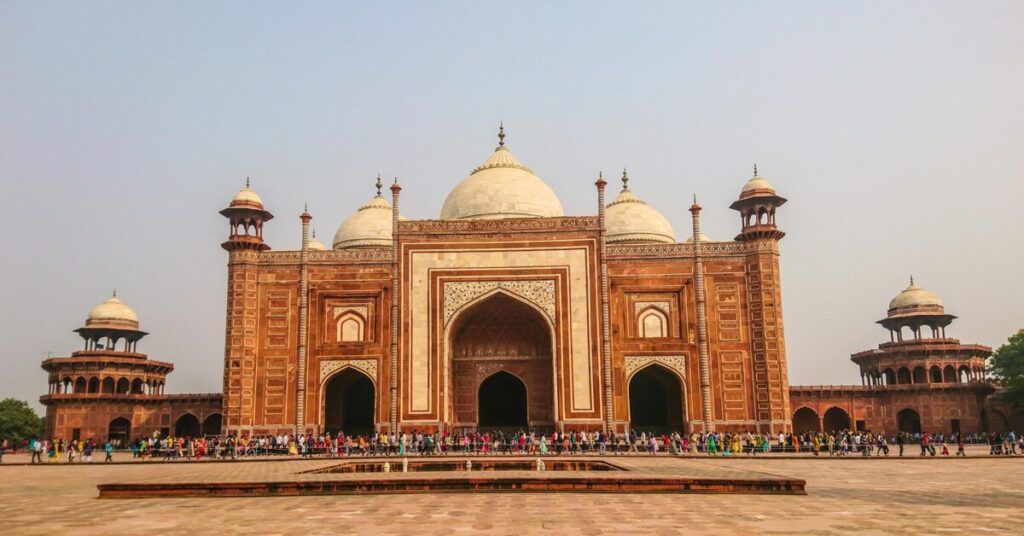
Agra – The City of Eternal Love
The Taj Mahal: Beyond the Postcard
Let’s start with honesty—yes, the Taj Mahal is as breathtaking as every photograph suggests, and somehow, when you stand before it in person, it exceeds even those heightened expectations. This isn’t hyperbole; it’s the near-universal experience of visitors who arrive thinking they’ve seen enough images to know what to expect, only to find themselves unexpectedly moved by the real thing.
History and Architecture of the Monument
The Taj Mahal represents Emperor Shah Jahan’s monument to his beloved wife Mumtaz Mahal, who died in 1631 giving birth to their fourteenth child. Grief-stricken, Shah Jahan commissioned this mausoleum, which took 22 years and 20,000 artisans to complete. But reducing the Taj to a “tomb” misses its essence—it’s a love poem written in marble, precious stones, and mathematical precision.
The architecture embodies perfect symmetry and proportion. The main dome rises to 73 meters, surrounded by four smaller domes and four minarets positioned at the corners. These minarets lean slightly outward—an intentional design so they would fall away from the tomb in an earthquake rather than crushing it. The white marble changes character throughout the day, appearing pinkish at dawn, milky white at noon, and golden under moonlight. This wasn’t accidental; Shah Jahan understood how light would interact with his creation.
The inlay work (pietra dura) covering the marble surfaces represents craftsmanship at its finest. Semi-precious stones—lapis lazuli, jade, coral, turquoise, carnelian—were cut into intricate floral patterns and set into the marble so precisely that you cannot feel the joins even today. A single flower might contain fifty different pieces of stone, each carefully shaped and positioned.
Best Times and Views of the Taj
Timing transforms your Taj experience. Sunrise visits offer the most magical views—the monument emerges from morning mist, crowds remain manageable, and the soft light creates ideal photography conditions. The gates open at sunrise (times vary by season), and arriving at opening time is strongly recommended.
Sunset visits provide different magic, as the marble glows golden and the crowds thin somewhat. However, security restrictions mean you must exit before actual sunset. Full moon nights offer special viewing opportunities (with advance booking required), creating an almost ethereal experience as moonlight bathes the white marble.
Beyond the main visit, viewing the Taj from across the Yamuna River at Mehtab Bagh (Moonlight Garden) provides stunning perspectives without the crowds. This elevated garden offers unobstructed views, particularly beautiful at sunset, and gives you a sense of how the Taj was meant to be experienced as part of a larger landscape design.
Agra Fort: The Red Fortress of Power
While tourists flock to the Taj, many underestimate Agra Fort—a mistake that shortchanges your understanding of Mughal power and splendor. This massive red sandstone fortress, predating the Taj by several decades, served as the main residence of Mughal emperors and contains some of the most exquisite palace structures you’ll encounter anywhere.
The fort’s imposing walls stretch 2.5 kilometers, rising over 20 meters high. Inside, you’ll discover a complex city-within-a-city: audience halls, private palaces, mosques, and gardens. The Jahangir Mahal showcases the blend of Hindu and Islamic architectural styles. The Khas Mahal (Private Palace) features intricate marble work. The Musamman Burj, an octagonal tower, is where Shah Jahan spent his final years imprisoned by his son Aurangzeb, gazing at the Taj Mahal where his beloved wife lay entombed.
This imprisonment adds poignant layers to your Agra experience. The emperor who commanded vast resources to build the world’s most beautiful monument ended his days as a prisoner, able to see but not visit his creation. The view from Musamman Burj to the Taj, framed by carved marble screens, remains one of history’s most bittersweet vistas.
The Diwan-i-Am (Hall of Public Audience) and Diwan-i-Khas (Hall of Private Audience) display the sophisticated court culture of the Mughals. The former could accommodate thousands of subjects awaiting the emperor’s justice, while the latter hosted select nobles and foreign ambassadors. The famous Peacock Throne, later looted by Persian invader Nader Shah, originally stood in the Diwan-i-Khas.
Fatehpur Sikri: The Abandoned Capital
About 40 kilometers from Agra lies Fatehpur Sikri, Emperor Akbar’s capital for merely 14 years before being abandoned due to water scarcity. This “ghost city” represents one of history’s most perfectly preserved examples of Mughal urban planning and architecture.
Akbar built Fatehpur Sikri to honor the Sufi saint Salim Chishti, who blessed him with an heir after years of childlessness. The complex includes palaces, mosques, and administrative buildings, all remarkably intact. The Buland Darwaza (Gate of Victory), standing 54 meters high, is among the world’s tallest gateways. The Jama Masjid houses Salim Chishti’s tomb, its marble screens carved with such delicacy they seem like lace rather than stone.
Walking through Fatehpur Sikri feels like time travel. The Panch Mahal, a five-story palace designed for the royal ladies, the Diwan-i-Khas with its unusual central pillar, and Jodha Bai’s Palace showcase Akbar’s syncretic approach to architecture, blending Hindu and Islamic elements. The city’s sudden abandonment left it frozen in time, providing insights into Mughal daily life that more continuously inhabited sites cannot offer.
Itmad-ud-Daulah: The Baby Taj
Often called the “Baby Taj,” the tomb of Itmad-ud-Daulah deserves more than its diminutive nickname suggests. Built by Empress Nur Jahan for her father, this mausoleum predates the Taj and actually pioneered many design elements that would reach perfection in Shah Jahan’s masterpiece.
The entire structure is built from white marble inlaid with semi-precious stones—the first Mughal building to use marble so extensively. The intricate inlay work, delicate marble screens, and Persian-inspired gardens create an intimate elegance distinct from the Taj’s grandeur. Because it draws fewer crowds, you can examine the craftsmanship closely and enjoy the peaceful gardens at leisure.
Mughlai Cuisine and Marble Craftsmanship
Agra offers experiences beyond monuments. The city’s Mughlai cuisine continues traditions established in royal kitchens. Petha, a translucent sweet made from ash gourd, is Agra’s signature confection, available in countless varieties. Restaurants like Pinch of Spice and Esphahan serve authentic Mughlai dishes—rich kormas, fragrant biryanis, and tandoori preparations that trace their lineage to imperial recipes.
The marble inlay craft (pietra dura) that adorns the Taj continues in workshops throughout Agra. Visiting these craftsmen reveals the painstaking process: stones are shaped, patterns designed, marble carved, pieces fitted with vegetable glue and stone dust paste, then polished. While many items are tourist-oriented, genuine craftsmanship persists, and purchasing directly from artisans supports this endangered art form.
Gwalior – The Gibraltar of India
The Magnificent Gwalior Fort
From Agra, our historical journey takes us to Gwalior, dominated by one of India’s most impressive hilltop forts. Sitting atop a 100-meter-high sandstone plateau, Gwalior Fort has witnessed countless dynasties—from the Tomars who built it, through Mughals and Marathas, to the British who called it the “Gibraltar of India” for its strategic importance and impressive defenses.
The approach itself impresses, with a winding road passing through several fortified gates. The fort’s walls stretch three kilometers, enclosing palaces, temples, and water tanks. Unlike many Indian forts that survive as ruins, Gwalior Fort remains largely intact, its structures telling stories spanning a thousand years.
Palaces Within the Fort Complex
The Man Mandir Palace stands as the fort’s architectural jewel. Built by Raja Man Singh Tomar in the 15th century, this palace combines Rajput and contemporary architectural elements in stunning fashion. The exterior features vibrant blue tiles forming intricate patterns—duck motifs, elephants, and geometric designs that once covered far more of the surface. Though time has taken its toll on these tiles, enough remain to suggest the palace’s former splendor.
Inside, the palace reveals innovative design features including sophisticated cooling systems, carved stone screens, and underground chambers where temperatures remain comfortable even in peak summer. The rooms where royal women lived on the upper floors contrast with the dungeons below, where prisoners (including eventually the Mughals) were held in dark, airless chambers—a stark reminder of power’s dual faces.
The Gujari Mahal, built by Raja Man Singh for his beloved queen Mrignayani, now houses an archaeological museum containing artifacts spanning centuries. The romantic story behind its construction—a king building a palace for a commoner he loved—adds human dimension to the military might surrounding it.
The Sound and Light Show
Every evening, Gwalior Fort hosts a sound and light show narrating the fort’s history through dramatic lighting and recorded narration. While some sound-and-light shows at Indian monuments feel dated, Gwalior’s production effectively brings the fort’s long history alive. The illuminated palaces and temples create stunning visuals, and even if you don’t follow every historical detail in the narration, the experience of the fort at night is memorable.
Jai Vilas Palace: Royal Opulence
The Jai Vilas Palace represents a completely different architectural and historical moment—the 19th century, when Indian rulers adapted European styles while maintaining their power under British paramountcy. Built by Maharaja Jayaji Rao Scindia in 1874, this palace combines Italian Renaissance, Corinthian, and Tuscan architectural elements in sometimes overwhelming opulence.
Part of the palace functions as the Scindia Museum, open to visitors. The Durbar Hall astounds with its massive proportions and twin chandeliers, each weighing 3.5 tons. Before hanging them, elephants were brought upstairs to test if the ceiling could bear their weight—it could. The hall’s Belgian glass fountain, silver train that carried brandy and cigars around the dinner table, and gold furniture create an atmosphere of almost absurd luxury.
The museum displays an eclectic collection: Mughal miniature paintings, Persian carpets, antique furniture, and curious items like the ivory card board where visitors left their calling cards. Walking through these rooms provides insights into how Indian royalty lived during the British Raj—caught between traditional roles and modern European influences, displaying wealth while having limited real power.
Tansen’s Legacy: Music and Culture
Gwalior claims deep connections to Indian classical music, most notably as the home of Tansen, one of the greatest musicians in Indian history and one of the “nine jewels” of Emperor Akbar’s court. Tansen’s tomb in Gwalior attracts musicians who believe that chewing leaves from the tamarind tree growing there enhances their vocal abilities.
Every December, the Tansen Music Festival brings classical musicians from across India to perform at his tomb. Even outside festival time, Gwalior maintains strong musical traditions. If interested in Indian classical music, seek out performances at local venues or visit the Gwalior Gharana (school of music) institutions where this art form continues being taught and practiced.
The connection between Gwalior Fort and music extends to Man Singh Tomar, who was both warrior-king and patron of the arts. The palace’s acoustics were designed to enhance musical performances, and the king himself was a musician and music theorist who contributed to the development of Dhrupad, one of the oldest forms of Hindustani classical music.
Scindia Dynasty and Modern Gwalior
The Scindia dynasty shaped modern Gwalior. Originally Maratha warriors who rose to prominence, the Scindias ruled Gwalior princely state during British rule and maintained importance after independence. The current head of the family, Jyotiraditya Scindia, serves in Indian politics, maintaining the family’s public role centuries after their royal power ended.
Understanding the Scindias helps you appreciate Gwalior’s character—a city that successfully blends ancient military heritage, Mughal architectural influence, Maratha political history, and modern development. Unlike purely tourist-oriented historical cities, Gwalior functions as a living city where history provides context rather than defining purpose.
Jhansi – The Land of the Warrior Queen
Rani Lakshmibai and the 1857 Uprising
Jhansi would be historically significant for its fort and strategic location regardless, but one person elevated it to legendary status—Rani Lakshmibai, the warrior queen who became one of India’s independence struggle’s most celebrated heroes. Her story combines personal tragedy, political intrigue, military courage, and ultimate sacrifice, creating a narrative that continues inspiring Indians generations later.
Born as Manikarnika, she married the Raja of Jhansi and took the name Lakshmibai. When her husband died and they had no biological heir (their adopted son wasn’t recognized by the British), the East India Company annexed Jhansi under the “Doctrine of Lapse”—a policy allowing British takeover of kingdoms without natural heirs. This injustice occurred repeatedly across India, creating widespread resentment that contributed to the 1857 uprising.
When the rebellion began, Rani Lakshmibai initially remained neutral, but circumstances drew her into the conflict. She eventually led Jhansi’s defense against British forces, fighting with remarkable courage and military skill. Though Jhansi eventually fell, the Rani escaped and continued fighting until dying in battle near Gwalior in June 1858, reportedly dressed as a male soldier and fighting to her last breath.
British officer Sir Hugh Rose, who fought against her, later wrote admiringly of her bravery. Today, Rani Lakshmibai symbolizes resistance against oppression, particularly as an example of female courage and leadership in a traditionally male-dominated domain.
Jhansi Fort: Symbol of Resistance
Jhansi Fort sits on Bangra Hill, overlooking the city. Built in the 17th century by Raja Bir Singh Deo of Orchha, the fort gained fame during the 1857 events when Rani Lakshmibai defended it against British siege. Walking through the fort, you can see cannon positions, thick walls, and gates that witnessed those historic battles.
The fort contains several temples, including one where the Rani is said to have worshipped before battle. A museum inside displays weapons, paintings depicting her life, and artifacts from that period. The views from the fort’s ramparts encompass the entire city—you can understand why this position held such strategic value and why the British committed substantial forces to capturing it.
The execution site where British forces hanged captured rebels serves as a sobering reminder of the uprising’s brutal suppression. The British response to 1857 included widespread executions and reprisals that traumatized Indian society and intensified anti-British sentiment that would eventually lead to independence nearly a century later.
Government Museum and Historical Artifacts
The Government Museum in Jhansi houses collections spanning the region’s history—from ancient sculptures to Bundela-era artifacts to 1857 memorabilia. The museum might not rival major metropolitan institutions, but it provides valuable context for understanding Bundelkhand’s distinct cultural and historical identity.
Particular exhibits detail the 1857 events from Indian perspectives, offering counternarratives to British colonial accounts. Historical photographs, personal belongings of Rani Lakshmibai and other leaders, weapons, and documents help visitors understand that period’s complexity—it wasn’t simply a “mutiny” as British called it, but a widespread uprising with complex causes and consequences.
Orchha: The Medieval Gem Nearby
Just 16 kilometers from Jhansi lies Orchha, a medieval town that serves as this region’s hidden treasure. While technically separate from Jhansi, most visitors combine them, and rightly so—Orchha offers remarkably preserved medieval architecture in a peaceful riverside setting.
Palaces and Temples of Orchha
The Orchha Fort complex contains three palaces: Jahangir Mahal, Raj Mahal, and Rai Praveen Mahal, each showcasing Bundela architectural brilliance. The Jahangir Mahal, built to welcome Mughal Emperor Jahangir, represents Indo-Islamic architectural fusion at its finest. Its central courtyard, elegant balconies, and viewing pavilions topped with domed chhatris create a silhouette that’s become Orchha’s icon.
The Raj Mahal, though less ornate, contains faded murals depicting religious and secular scenes. Walking through its chambers, you glimpse courtly life centuries ago. The Rai Praveen Mahal, built for a royal courtesan famed for her beauty and artistic talents, showcases how even buildings for non-royal residents received architectural attention.
The Chaturbhuj Temple, built to house a Ram image that never actually resided there, dominates Orchha’s skyline with its unusual blend of temple and fort architecture. The actual Ram image remains in the Ram Raja Temple—the only place in India where Ram is worshipped as a king rather than a deity, creating unique religious practices.
The Betwa River and Cenotaphs
The Betwa River flows past Orchha, its banks lined with cenotaphs (chhatris) of Orchha’s rulers. These memorial structures, with their elegant domes and pillared pavilions, create stunning reflections in the river. During sunset, when golden light bathes these structures and reflects off the water, the scene achieves almost surreal beauty that photographers find irresistible.
Crossing the ancient multi-arched bridge to reach the cenotaphs feels like stepping back in time. Unlike busy tourist sites, Orchha maintains a peaceful, almost forgotten quality. This obscurity is part of its charm—you can explore at leisure without crowds, letting the atmosphere of bygone grandeur wash over you naturally.
Connecting the Historical Dots
The Mughal-Maratha-British Timeline
This three-city circuit traces a clear historical progression. Agra shows the Mughal Empire at its zenith (16th-17th centuries), when emperors commanded vast resources and created architectural masterpieces. Gwalior reveals the complex period when regional powers like the Tomars and later the Marathas asserted independence while negotiating with dominant imperial powers—first Mughals, then British. Jhansi represents the colonial period and resistance against it, culminating in 1857’s watershed moment.
Understanding this chronology enhances each site’s significance. The architectural elements you see evolved over centuries: Mughal influences spreading from Agra, Rajput and Bundela styles asserting regional identity, Maratha political power reflected in structures like Gwalior’s later additions, and finally British colonial architecture appearing in 19th-century buildings.
The relationships between these powers were complex—not simple conquest and resistance, but negotiations, alliances, betrayals, and cultural exchanges. Akbar married Rajput princesses, creating political alliances reflected in Fatehpur Sikri’s architectural blend. The Scindias sometimes cooperated with the British, sometimes resisted them. These nuances make the history richer than simple good-versus-evil narratives.
Architectural Evolution Across Three Cities
Architecture tells history when you know how to read it. In Agra, you see the perfection of Islamic architectural principles—geometric precision, perfect symmetry, emphasis on surface decoration, and sophisticated water management. The red sandstone preferred by Akbar gives way to white marble under Shah Jahan, reflecting changing aesthetic preferences and perhaps greater empire wealth allowing more expensive materials.
Gwalior Fort shows earlier, more military-focused architecture gradually incorporating decorative elements as power became secure. The Man Mandir Palace’s blue tiles represent specifically Indian decorative approaches distinct from Persian influences dominant in Mughal architecture. The 19th-century Jai Vilas Palace’s European styles show how Indian rulers adopted colonial aesthetics even while maintaining traditional political structures.
Jhansi and Orchha display Bundela architectural styles—regional characteristics that maintained distinctiveness despite proximity to Mughal power. The emphasis on chhatris (domed pavilions), integration with natural landscape, and specific decorative motifs mark these as products of a distinct cultural tradition.
Planning Your Historical Journey
Suggested Itinerary: 5-7 Days
Days 1-2: Agra
- Day 1: Early morning Taj Mahal visit, afternoon at Agra Fort, evening exploring Mehtab Bagh for Taj sunset views
- Day 2: Morning trip to Fatehpur Sikri (half day needed), afternoon visit to Itmad-ud-Daulah, evening shopping for marble crafts or enjoying Mughlai cuisine
Days 3-4: Gwalior
- Day 3: Travel to Gwalior (120 km from Agra, 2-3 hours), afternoon exploring Gwalior Fort and Man Mandir Palace, evening sound and light show
- Day 4: Morning visit to Jai Vilas Palace and museum, afternoon at Tansen’s tomb and surrounding area, free time to explore city
Days 5-6: Jhansi and Orchha
- Day 5: Travel to Jhansi (120 km from Gwalior, 2-3 hours), visit Jhansi Fort and Government Museum, evening at leisure
- Day 6: Full day in Orchha—explore fort complex palaces, temples, and cenotaphs, enjoy riverside atmosphere
Day 7: Departure or Extension
- Morning in Orchha if more time desired, or depart from Jhansi (which has good train connections to Delhi, Agra, and other major cities)
This itinerary balances major monuments with free time for meals, shopping, and simply absorbing each place’s atmosphere. Adjust based on your interests—architecture enthusiasts might want extra time in Agra, while history buffs might prefer more time in Jhansi and Orchha.
Transportation and Routes
These three cities form a practical triangle with good road and rail connections. Agra to Gwalior covers approximately 120 kilometers, manageable in 2-3 hours by car or train. Gwalior to Jhansi is similar distance and time. Jhansi back to Agra (about 235 kilometers) or onward to Delhi or other destinations is easily arranged.
Many travelers hire a car with driver for this circuit, offering flexibility to stop at interesting sites along routes and not worry about train schedules. The cost is reasonable when split among multiple travelers, and good roads make the drives comfortable. Alternatively, trains connect all three cities with regular services—Agra, Gwalior, and Jhansi all lie on major rail routes.
Within cities, auto-rickshaws, cycle-rickshaws, and app-based cabs like Uber and Ola handle local transportation. Agra’s main monuments spread across the city, so vehicle hire makes sense. Gwalior Fort requires uphill travel, easily managed by rickshaw. Jhansi and especially Orchha are more compact and walkable.
Best Season for This Circuit
October through March offers ideal conditions. Winter months (November-February) provide pleasant daytime temperatures (15-25°C) perfect for exploring forts and monuments. Early mornings can be chilly, so pack a light jacket. This period sees peak tourist numbers, especially in Agra, so expect crowds at the Taj Mahal.
April-June brings intense heat, with temperatures frequently exceeding 40°C. Unless you’re comfortable with extreme heat, avoid this period. Monuments become exhausting to explore, and the experience suffers when you’re primarily focused on finding shade and staying hydrated.
Monsoon season (July-September) brings humidity and intermittent rain but fewer tourists. If you don’t mind occasional showers and high humidity, this period offers the advantage of smaller crowds and lower hotel rates. The Taj Mahal during rain has its own dramatic beauty, and the greener landscapes photograph beautifully.
Accommodation Options
All three cities offer diverse accommodation. Agra, as a major tourist destination, provides everything from budget guesthouses to luxury properties. Hotels near the Taj (especially those with Taj views from rooms or rooftops) command premium prices but offer unique experiences. The area around Fatehabad Road has many good mid-range options.
Gwalior has fewer tourist-focused hotels but several comfortable mid-range properties catering to business travelers that work perfectly for tourists. The Usha Kiran Palace, a heritage hotel, offers upscale accommodation in a converted royal property if you want to splurge.
Jhansi has basic to mid-range hotels adequate for a night or two. Many visitors prefer staying in Orchha, which offers more atmospheric options including heritage properties converted from old havelis. Orchha’s accommodation, while simpler than Agra’s luxury hotels, provides more authentic experiences and pleasant riverside settings.
Cultural Experiences and Local Flavors
Beyond monuments, engage with regional culture and cuisine. Agra’s Mughlai food—rich kormas, fragrant biryanis, kebabs—represents North Indian cuisine at its finest. Don’t miss petha in its many varieties, and try bedai (a puffed bread) with spicy potato curry for breakfast.
Gwalior offers its own specialties including bade ki sabzi (a preparation using dried lentil dumplings) and lavang lata (a sweet pastry with clove and cardamom). The city’s sweet shops serve excellent traditional sweets like mawa-bati and gajak (sesame seed preparations).
Shopping opportunities abound. Agra’s marble inlay work continues centuries-old traditions—visit workshops to see craftsmen at work before purchasing. Leather goods are another Agra specialty. Gwalior is known for textiles, particularly hand-woven saris. Jhansi and Orchha offer less extensive shopping but you’ll find traditional handicrafts and local specialties.
If possible, attend cultural performances. Agra occasionally hosts Kathak dance performances. Gwalior, given its musical heritage, offers opportunities to hear classical music. Even informal performances in hotel restaurants or cultural centers provide windows into North India’s rich performing arts traditions.
Conclusion
The journey through Agra, Gwalior, and Jhansi offers more than a tour of historical monuments—it’s a narrative journey through crucial chapters of Indian history. You’ll witness the Mughal Empire’s architectural and cultural pinnacle, understand the complex dynamics between regional powers and imperial authorities, and confront the dramatic story of India’s first major organized resistance against colonial rule.
Each city contributes essential elements to your understanding. Agra teaches about empire at its height, when power and wealth combined with artistic vision to create timeless beauty. Gwalior shows centuries of regional assertion and adaptation, where local dynasties maintained identity while navigating larger imperial powers. Jhansi embodies resistance and sacrifice, reminding us that freedom often comes at tremendous cost paid by ordinary and extraordinary people alike.
What makes this circuit particularly valuable is how it avoids the single-narrative trap. History here isn’t just about emperors or conquerors or heroes, but about the complex interplay of cultures, religions, political systems, and individual choices that shaped the region. The architecture alone tells stories of cultural exchange, artistic evolution, and changing power structures.
So pack your curiosity along with your camera, bring comfortable walking shoes and an open mind, and prepare for a journey through time that will leave you with not just photographs but a deeper understanding of the forces that shaped modern India.
FAQs
1. How many days do I need to properly explore Agra, Gwalior, and Jhansi?
A minimum of 5-7 days allows meaningful exploration without excessive rushing. Agra deserves at least two full days to properly see the Taj Mahal, Agra Fort, and Fatehpur Sikri without feeling hurried. Gwalior needs 1-2 days for the fort, palaces, and museum. Jhansi and Orchha together require 1-2 days. If you’re a photography enthusiast or history buff wanting to explore more deeply, add 2-3 extra days. The beauty of this circuit is its flexibility—you can adjust based on interests, spending more time where you’re most engaged and less where topics interest you less.
2. Is the Taj Mahal open every day?
No, the Taj Mahal closes every Friday for prayers at the mosque within the complex. Plan your Agra visit accordingly. It opens at sunrise and closes at sunset (times vary by season), with the last entry one hour before closing. Night viewing is offered on full moon nights and two nights before and after (five nights total per month), requiring advance booking and costing more than day visits. Sunrise visits offer the best experience with fewer crowds and beautiful light, so arrive at opening time if possible.
3. Can I visit Orchha as a day trip from Jhansi?
Absolutely! Orchha sits just 16 kilometers from Jhansi, making day trips easy via taxi, auto-rickshaw, or local bus. However, many travelers recommend staying overnight in Orchha to fully experience its peaceful atmosphere, especially at sunset and sunrise when the light on the palaces and cenotaphs is most beautiful and crowds are minimal. Several heritage properties and guesthouses offer atmospheric accommodation at reasonable prices. If time allows, an overnight stay in Orchha rather than Jhansi is worth considering—Orchha offers more charm and better accommodation ambiance than functional Jhansi.
4. What is the approximate budget for this 5-7 day trip?
Budget varies significantly based on accommodation and travel choices. Mid-range travelers can expect approximately ₹2,000-4,000 ($25-50) per night for decent hotels, ₹500-1,000 ($6-12) per day for food, monument entrance fees totaling around ₹3,000-4,000 ($35-50) for major sites, and transportation costs of ₹8,000-15,000 ($95-180) if hiring a car with driver for the circuit. Total budget might range from ₹30,000-50,000 ($360-600) per person, excluding flights to/from your starting point. Budget travelers using trains and staying in basic accommodation can manage for less; luxury travelers wanting top hotels and private guides will spend significantly more. Foreign tourists pay substantially higher monument entrance fees than Indian citizens.
5. Is photography allowed inside all monuments?
Photography rules vary by monument. At the Taj Mahal, photography is allowed in the gardens and exterior, but not inside the main mausoleum chamber. Video cameras require an additional fee. Agra Fort and Fatehpur Sikri allow photography in most areas. Gwalior Fort and Jai Vilas Palace permit photography in most sections, though some museum areas restrict it. Always check signage or ask guards about specific restrictions. Respectful photography is generally welcomed, but avoid using flash on old paintings and artifacts as it causes damage. Commercial photography (professional shoots, wedding photos) requires special permissions and fees. Drone photography is prohibited at all ASI (Archaeological Survey of India) protected monuments without special permits.



[…] their journey to include Gwalior for a complete cultural and spiritual circuit. TripCosmos’s Agra Gwalior and Jhansi Historical Tour Package is one of our bestselling multi-city heritage packages — covering three of Central India’s most […]